


Our Capabilities
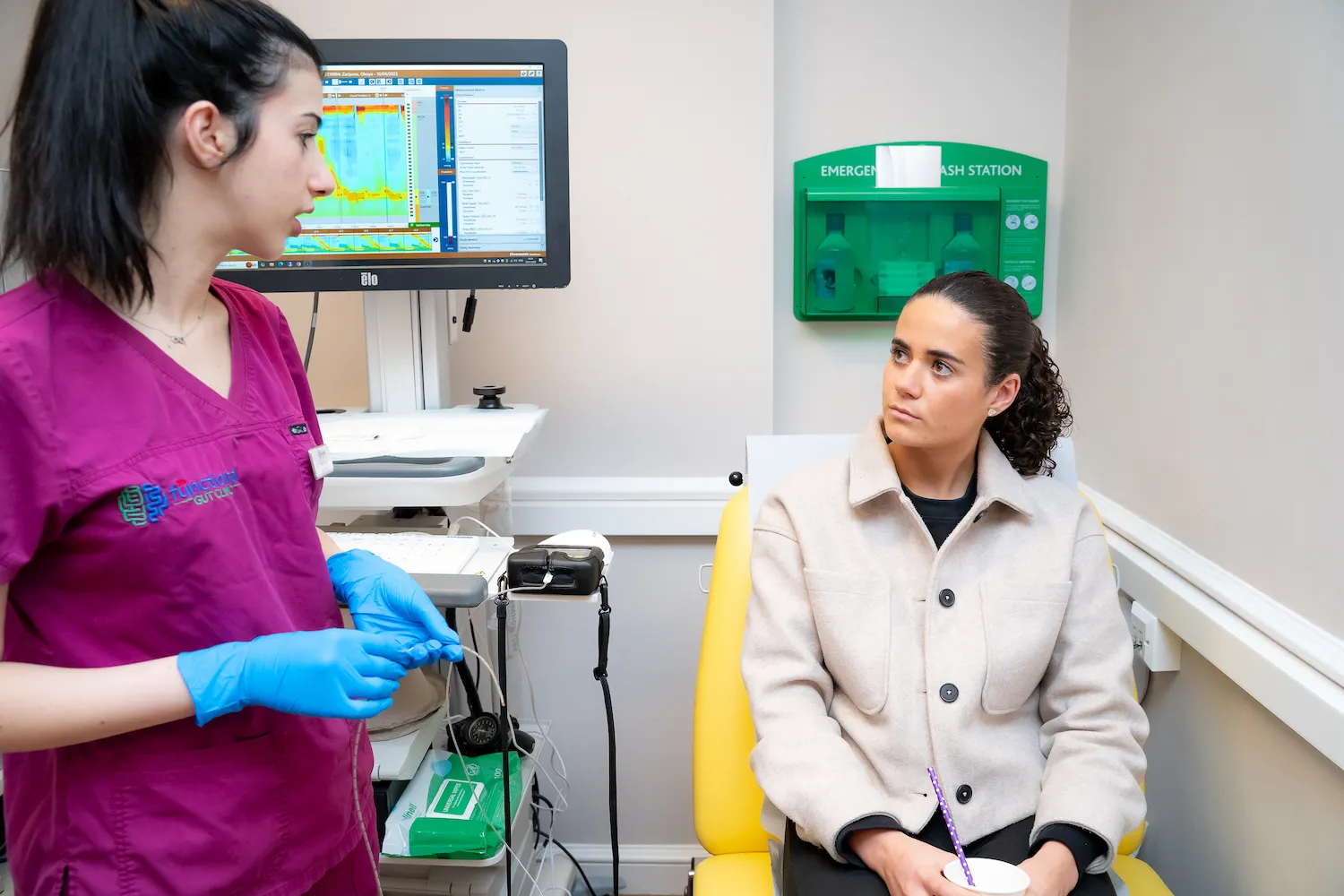
At the Functional Gut Clinic, we go beyond standard contract research organisation (CRO) services. As the UK’s largest accredited gastrointestinal (GI) physiology service, we deliver trials that are scientifically rigorous, commercially impactful and tailored to your business.
Speak to our clinical team within 2 business days
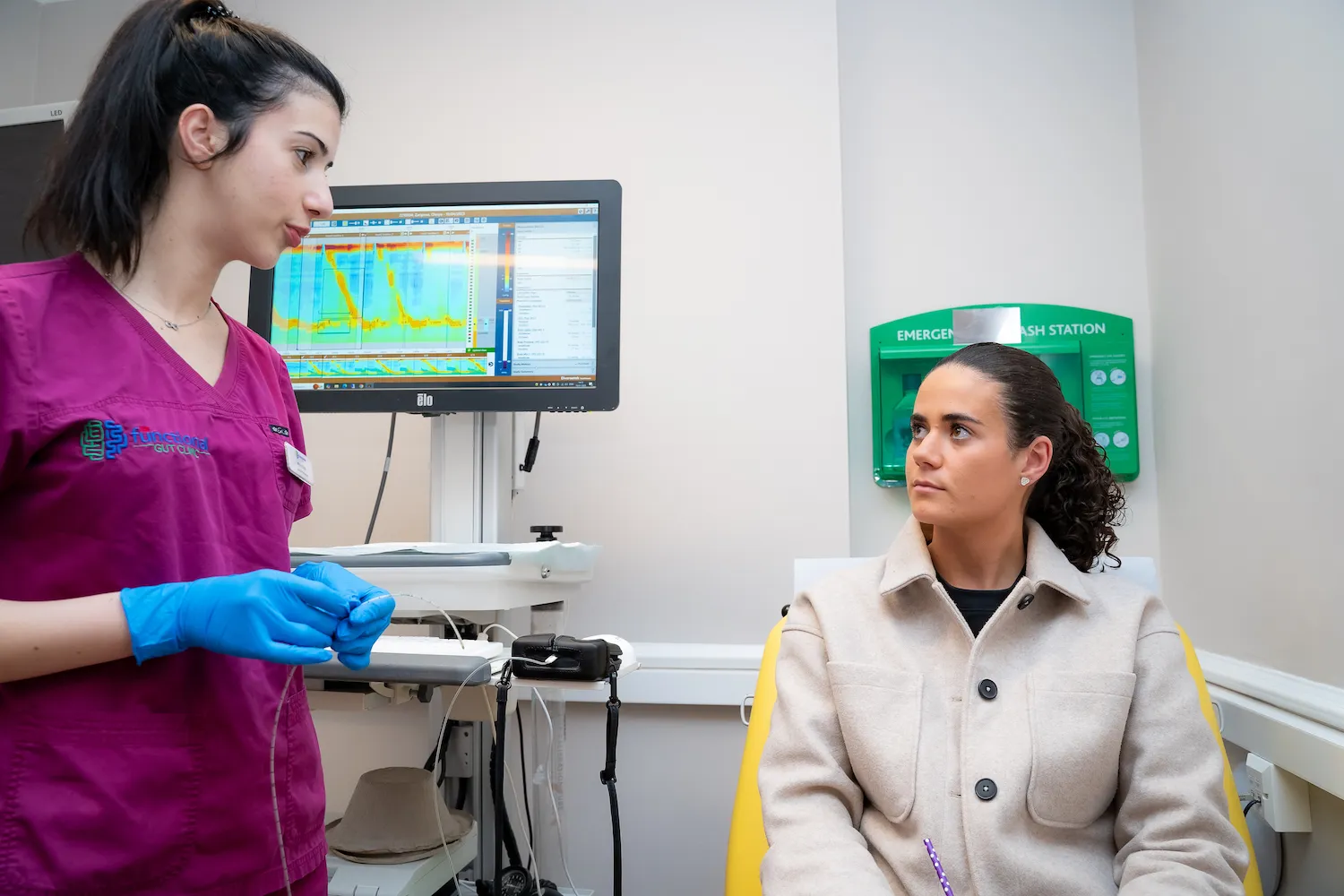
The gold-standard GI testing we offer:
Functional Gut Clinic
Stool microbiome Assessments
Intestinal permeability testing
Small intestinal bacterial overgrowth (SIBO )testing
Intestinal transit studies
Hydrogen sulphide assessment
Intestinal methanogen overgrowth assessment
Carbohydrate malabsorption testing
Oesophageal manometry
24-hour reflux testing
Laryngopharyngeal reflux (LPR) testing
Functional Gut Clinic
Capsule sponge testing
Pharyngeal manometry testing
Gastric acid output testing
Gastric emptying testing
Gastric alimetry
Helicobacter pylori breath testing
Endoanal ultrasound
Anorectal manometry
Pudendal nerve motor latency testing
Capsule endoscopy
Other CROs
Generic study templates
Limited GI expertise
No biomarker integration
No claims guidance
Slower recruitment
No HCP interpretation
Don’t see the capability you need?

We have conducted clinical research trials for:






Stool microbiome assessments
Microbiome sequencing
Microbiome sequencing is conducted to evaluate the communities of microbes within participants' gastrointestinal tracts. This conducted in partnership with leading laboratories to ensure the highest quality standards. Depending on study objectives, either 16S rRNA sequencing, shotgun metagenomic sequencing or AI stool imaging can be used to analyse participants’ microbiome before and after intervention.
16S rRNA sequencing provides an overview of microbial community shifts at the genus level.
Shotgun metagenomic sequencing offers deeper insights, detecting changes at species and even strain level.
AI stool imaging provides a novel alternative to stool testing that allows more frequent tracking of diversity shifts over time at a lower cost than traditional sequencing.
Metabolic analysis
Metabolomic profiling can be incorporated to assess microbiome function through metabolites such as short-chain fatty acids (SCFAs) and other relevant biomarkers.
Assessments Of Gut Physiology

Intestinal Permeability (Leaky Gut Test)
Intestinal barrier integrity is a critical component of digestive and systemic health. We use an in-house lactulose:mannitol urine assay, quantified via high-performance liquid chromatography, as a direct measure of permeability. Optional blood markers such as LBP and LPS can also be included via validated ELISAs.
The lactulose: mannitol method is an established approach for assessing increased intestinal permeability, leveraging differential absorption of the smaller molecule (mannitol) versus the larger molecule (lactulose). A high lactulose-to-mannitol ratio in urine indicates compromised barrier function.

Intestinal Transit Studies
Transit can be assessed using a range of validated methods, selected according to study design and budget. Advanced capsule technologies provide detailed segmental transit data—including gastric, small bowel, and colonic transit times—alongside luminal fermentation measures. For simpler designs, traditional approaches such as radio-opaque marker studies or blue food color tests offer cost-effective solutions while delivering clinically relevant insights.
Methods of transit assessment
The Atmo Capsule is a swallowed, gas-sensing device that monitors gastrointestinal function in real time. It detects changes in H₂, CO₂, O₂, and temperature as it travels through the gut, transmitting data wirelessly to a handheld device and smartphone app for physician analysis.
This provides a non-invasive, accurate assessment of GI motility and can help diagnose conditions such as slow transit constipation.
Cost-effective approaches such as radio-opaque markers or the Blue Cookie test provide whole-gut transit times. These methods are ideal for early-phase trials or when budget constraints require pragmatic solutions, while still delivering clinically relevant motility data.
Upper GI Physiology
Upper GI assessments focus on the throat and oesophagus to evaluate swallowing function and assess reflux symptoms—essential for diagnosing motility disorders and conditions such as GERD or LPR.
We offer:
Oesophageal Manometry (OM) – Measures muscle contractions and coordination in the oesophagus to assess swallowing function.
24-hour Reflux Testing – Uses pH and impedance sensors to quantify acid, non-acid, and gaseous reflux in an ambulatory setting.
24-hour Laryngopharyngeal Reflux (LPR) Testing – Detects reflux reaching the throat and voice box, often linked to chronic cough or throat symptoms.
Pharyngeal Manometry Testing - Assesses pharyngeal contractility and upper oesophageal sphincter pressure to identify motility disorders, as well as luminal distention and bolus flow via impedance.
Capsule Sponge Testing - Provides a minimally invasive method for sampling oesophageal mucosa for diagnostic analysis of conditions such as Barrett’s esophagus.
Mid-Gut Physiology
Mid-gut assessments focus on gastric function, which is critical for diagnosing motility disorders and functional gastric conditions.
Gastric Alimetry
Also known as body surface gastric mapping, this is a breakthrough, non-invasive test used to diagnose functional gastric disorders. Gastric Alimetry provides healthcare professionals with a detailed picture of stomach activity, helping rule out certain causes and guide treatment decisions.
Gastric Emptying Studies
This test evaluates how long it takes for food to leave the stomach. It is particularly useful for identifying conditions such as gastroparesis, where delayed emptying occurs due to abnormal muscle or nerve function.
The process involves eating a small meal containing a safe chemical marker (13C). As the meal digests, the marker is excreted through the lungs. By measuring the amount of this chemical in your breath over time, we can accurately assess gastric emptying performance.
Gastric Acid Output Testing
Quantifies stomach acid production to detect hypo- or hyperchlorhydria and guide treatment strategies
Helicobacter pylori Breath Testing
Detects active H. pylori infection, a major cause of peptic ulcers and chronic gastritis.
Lower GI Physiology
Lower GI assessments focus on the rectum and anal canal to evaluate muscle function, sensation, and structural integrity—key factors in bowel control and continence.
Anorectal Manometry (ARM)
Measures the strength and coordination of anal and rectal muscles. Participants perform simple exercises such as squeezing and coughing to assess function. ARM is recommended for patients with constipation or faecal incontinence due to muscle weakness, injury, or structural issues.
Endoanal Ultrasound
Provides imaging of anal canal muscles that identifies structural abnormalities or damage contributing to bowel symptoms.
Pudendal Nerve Motor Latency Testing
Evaluates pudendal nerve function affecting pelvic floor control and continence.
Breath Testing
Hydrogen and methane breath testing (HMBT)
Hydrogen and methane breath testing is a widely accepted method for detecting changes in gut microbiome activity. It is primarily used to identify Small Intestinal Bacterial Overgrowth (SIBO) or Intestinal Methanogen Overgrowth (IMO).
This test measures fermentation patterns in response to specific substrates and correlates these patterns with participant symptoms, providing valuable insights into dysbiosis-related conditions.
Hydrogen Sulfide
We are the only UK provider of an assay for hydrogen sulphide measurement. Elevated H₂S levels are associated with certain bacterial species and symptoms such as diarrhoea and malodorous flatulence. Including H₂S testing adds diagnostic precision and enhances the novelty of your research.

Carbohydrate malabsorption testing
HMBT can also be utilised to determine an individual's ability to absorb carbohydrates such as lactose and fructose, helping diagnose intolerance and related symptoms.
Assessments of gut physiology
Intestinal permeability (leaky gut test)
Intestinal barrier integrity is a critical component of digestive and systemic health. We use an in-house lactulose:mannitol urine assay, quantified via high-performance liquid chromatography, as a direct measure of permeability. Optional blood markers such as LBP and LPS can also be included via validated ELISAs.
The lactulose:mannitol method is an established approach for assessing increased intestinal permeability, leveraging differential absorption of the smaller molecule (mannitol) versus the larger molecule (lactulose). A high lactulose-to-mannitol ratio in urine indicates compromised barrier function.
Intestinal transit studies
Transit can be assessed using a range of validated methods, selected according to study design and budget. Advanced capsule technologies provide detailed segmental transit data—including gastric, small bowel, and colonic transit times—alongside luminal fermentation measures. For simpler designs, traditional approaches such as radio-opaque marker studies or blue food colour tests offer cost-effective solutions while delivering clinically relevant insights.
Methods of transit assessment
The Atmo Capsule is a swallowed, gas-sensing device that monitors gastrointestinal function in real time. It detects changes in H₂, CO₂, O₂, and temperature as it travels through the gut, transmitting data wirelessly to a handheld device and smartphone app for physician analysis.
This provides a non-invasive, accurate assessment of GI motility and can help diagnose conditions such as slow transit constipation.
Cost-effective approaches such as radio-opaque markers or the Blue Cookie test provide whole-gut transit times. These methods are ideal for early-phase trials or when budget constraints require pragmatic solutions, while still delivering clinically relevant motility data.
Upper GI physiology
Upper GI assessments focus on the throat and oesophagus to evaluate swallowing function and assess reflux symptoms—essential for diagnosing motility disorders and conditions such as GERD or LPR.
We offer:
Oesophageal Manometry – Measures muscle contractions and coordination in the oesophagus to assess swallowing function, in addition to bolus flow and clearance through the oesophagus.
24-hour Reflux Testing – Uses pH and impedance sensors to quantify acid, non-acid, and gaseous reflux in an ambulatory setting.
24-hour Laryngopharyngeal Reflux (LPR) Testing – Detects reflux reaching the throat and voice box, often linked to chronic cough or throat symptoms.
Pharyngeal Manometry - Assesses pharyngeal contractility and upper oesophageal sphincter pressure to identify motility disorders, as well as luminal distention and bolus flow via impedance.
Capsule Sponge Testing - Provides a minimally invasive method for sampling oesophageal mucosa for diagnostic analysis of conditions such as Barrett’s oesophagus.

Mid gut testing
Mid-gut assessments focus on gastric function, which is critical for diagnosing motility disorders and functional gastric conditions.
We offer:
Gastric Alimetry - Also known as body surface gastric mapping, Gastric Alimetry is a non-invasive test that provides detailed insights into stomach activity, helping rule out certain causes and guide treatment decisions.
Gastric Emptying Studies - Evaluates how long it takes for food to leave the stomach, particularly useful for diagnosing gastroparesis. The process involves consuming a meal containing a non-radioactive isotope (Carbon-13). As digestion occurs, the marker is excreted through the lungs. Measuring this in breath samples over time allows accurate assessment of gastric emptying rates.
Gastric Acid Output Testing - Quantifies stomach acid production to detect hypo- or hyperchlorhydria and guides treatment strategies
Helicobacter pylori Breath Testing - Detects active H. pylori infection, a major cause of peptic ulcers and chronic gastritis.

Lower GI physiology
Lower GI assessments focus on the rectum and anal canal to evaluate muscle function, sensation, and structural integrity—key factors in bowel control and continence.
We offer:
Anorectal Manometry (ARM) - Measures the strength and coordination of anal and rectal muscles. Participants perform simple exercises such as squeezing and coughing to assess function. ARM is recommended for patients with constipation or faecal incontinence due to muscle weakness, injury, or structural issues.
Endoanal Ultrasound - Provides imaging of anal canal muscles that identifies structural abnormalities or damage contributing to bowel symptoms.
Pudendal Nerve Motor Latency Testing - Evaluates pudendal nerve function affecting pelvic floor control and continence.
Other assessments
Validated clinical outcome assessments
Standardised tools used to measure clinically relevant endpoints and treatment efficacy.
Patient-reported outcome assessments
Objective data is essential, but participant-reported outcomes often provide critical insights into the efficacy of a product. We provide two key approaches:

Questionnaires
Selecting the right questionnaires is crucial for data integrity and publications.
Our team has extensive experience with validated tools for assessing a variety of gastrointestinal conditions that quantify changes in symptoms, treatment impact, and quality of life.

Diary-based assessments
We design and administer diaries to maximise participant engagement and compliance, ensuring the most relevant data is collected for analysis, including but not limited to bowel habits, gastrointestinal symptoms and treatment compliance.
Safety assessments
Participant safety is paramount during clinical research. We monitor adverse events and tolerability to ensure patient safety throughout the study. Regulatory-compliant standard operating procedures are in place to ensure adverse events are classified and escalated appropriately.
Blood-based biomarkers

Our partner laboratories provide a range of high-quality tests tailored to your product’s needs, including:
Blood-based biomarkers associated with inflammation, immune function, and nutritional status.
Standard safety panels for haematology and biochemistry.
Digital
biomarkers
Collection of objective health data through connected devices and sensors for continuous monitoring. Parameters such as sleep, heart rate variability and blood glucose response can be tracked over periods of time.
Nutritional biomarkers
Measurement of dietary intake and nutrient status to assess nutritional health and its influence on outcomes.
Lifestyle questionnaire
Captures information on habits such as diet, exercise and sleep to contextualise clinical findings.
Anthropometrics
Records body measurements such as weight, height and body composition to monitor physical changes over time.
Trusted by leading brands
What our partners say
"Working with the Functional Gut Clinic on our clinical study was a great experience. The team is highly professional, with great attention to detail and an in-depth expertise in the area of gut health. The study was conducted in the most robust way possible, with timely sample and data analysis. The study report was thorough and was provided in a readily usable format. The team did a wonderful job of keeping us appraised of any challenges or delays to any part of the study. Overall, it was a very positive experience and one that Brightseed would be happy to repeat when another opportunity arises."

"Our collaboration with the Functional Gut Clinic has been very exciting and productive. Together, we are working to identify novel molecular biomarkers for gut health, with the shared goal of enabling earlier diagnosis and better preventive management. In our current project, we are exploring urinary microRNA as potential biomarkers for Irritable Bowel Syndrome — an area with significant unmet clinical need. With several exciting genomics-driven biomarker discovery projects already in the pipeline, I look forward to strengthening this partnership and advancing impactful research together.”* – Prof. Arijit Mukhopadhyay"

"It was a pleasure to work with the Functional Gut Clinic who conducted a pilot study of our product in participants with constipation. They provided a hassle-free experience in conducting a clinical trial, with the results written up and presented by the FGC team at a national conference."

FGC was an excellent clinical trial site during our Phase 2a program at EnteroBiotix. The site demonstrated exceptional speed of recruitment while maintaining excellent patient retention, management and compliance throughout the study. Their team showed strong capability in handling a complex protocol and patient population, consistently meeting both sponsor expectations and regulatory requirements to a high standard. The site staff were highly engaged, enthusiastic, and supportive at every stage of the trial, making collaboration seamless and effective.

"We had an excellent experience working with the Functional Gut Clinic on the Vitals+ clinical trial. Together, we investigated the prevalence of hidden micronutrient deficiencies in healthy adults and rigorously assessed whether Vitals+ could correct these deficiencies in a controlled clinical setting. Their approach was scientifically robust and executed with genuine academic rigour, from study design through to delivery. Recruitment was efficient, timelines were well managed, and participant retention was strong throughout the trial. Overall, they were a highly professional and reliable research partner, and we look forward to continuing our scientific collaborations".


© Copyright The Functional Gut Group 2026