
Bloating
Struggling with bloating? Here’s what you need to know to find relief.
ALL TEST ARE ACCREDITED & REGULATED BY



What is bloating?
When you’re bloated, your stomach or abdomen can feel full and uncomfortable, or even painful.
This bloating happens when your gastrointestinal tract contains too much gas or air. Bloating can be mild, or more severe, and may present as:
– A visibly distended or swollen abdomen
– Feeling very full and uncomfortable
– Feeling of tightness in the abdomen
– Excess gas – belching and/or flatulence
– Rumbling or gurgling
There are several causes of bloating, so it’s important to diagnose the cause of your bloating and find out why it’s happening to you.

Why does bloating happen?
Prolonged periods of bloating could indicate an underlying health problem, if so you should see your GP.
Possible causes can include:
Irritable bowel syndrome (IBS diagnosis)
Ulcerative colitis, a form of inflammatory bowel disease (IBD), where the inner lining of the large bowel is inflamed and develops ulcers
Crohn’s disease, the other form of IBD, where some parts of your colon are inflamed
Too much bacteria in your small intestine (called small intestinal bacterial overgrowth, or SIBO)
Gastroesophageal reflux disease
Food intolerances, especially lactose or fructose intolerance
Producing too much gas (dysbiosis and fermentation)
Weight gain
Stress or anxiety
Delays in your food and drink moving on from your stomach (called gastroparesis)
Eating too quickly, so that you swallow too much air (called aerophagia)
Diagnosing bloating
Feeling bloated is no fun, but once you know what’s going on you can start to manage your symptoms and the underlying causes.
Testing options:
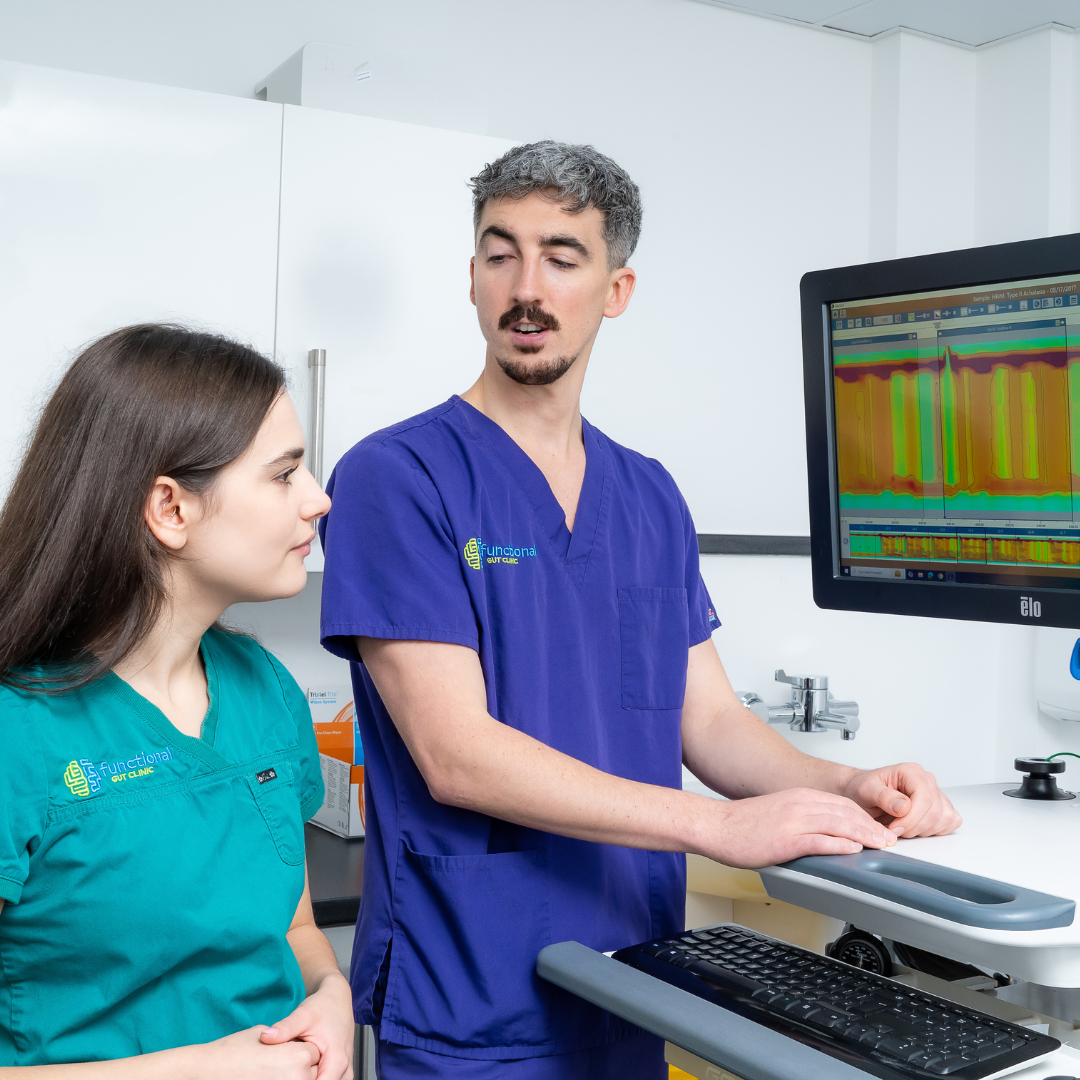
At the Functional Gut Clinic, we can run the following tests to diagnose the causes of bloating:
Gastric emptying test– which measures how quickly food leaves your stomach
Carbohydrate malabsorption breath test– which finds out if you have certain food intolerances (lactose or fructose)
Small intestinal bacterial overgrowth (SIBO) breath test– which finds out if you have an overgrowth of bacteria in your small intestine (called SIBO)
Oesophageal manometry– which measures the function of your oesophagus (food pipe)
24-hour pH impedance monitoring– which looks at whether you have any reflux
Colonic transit study-a non-invasive test which looks at how long it takes for faeces to pass through your bowl
Learn more about bloating
Functional Gut Clinic launches dedicated Clinical Trials Division to accelerate digestive health research
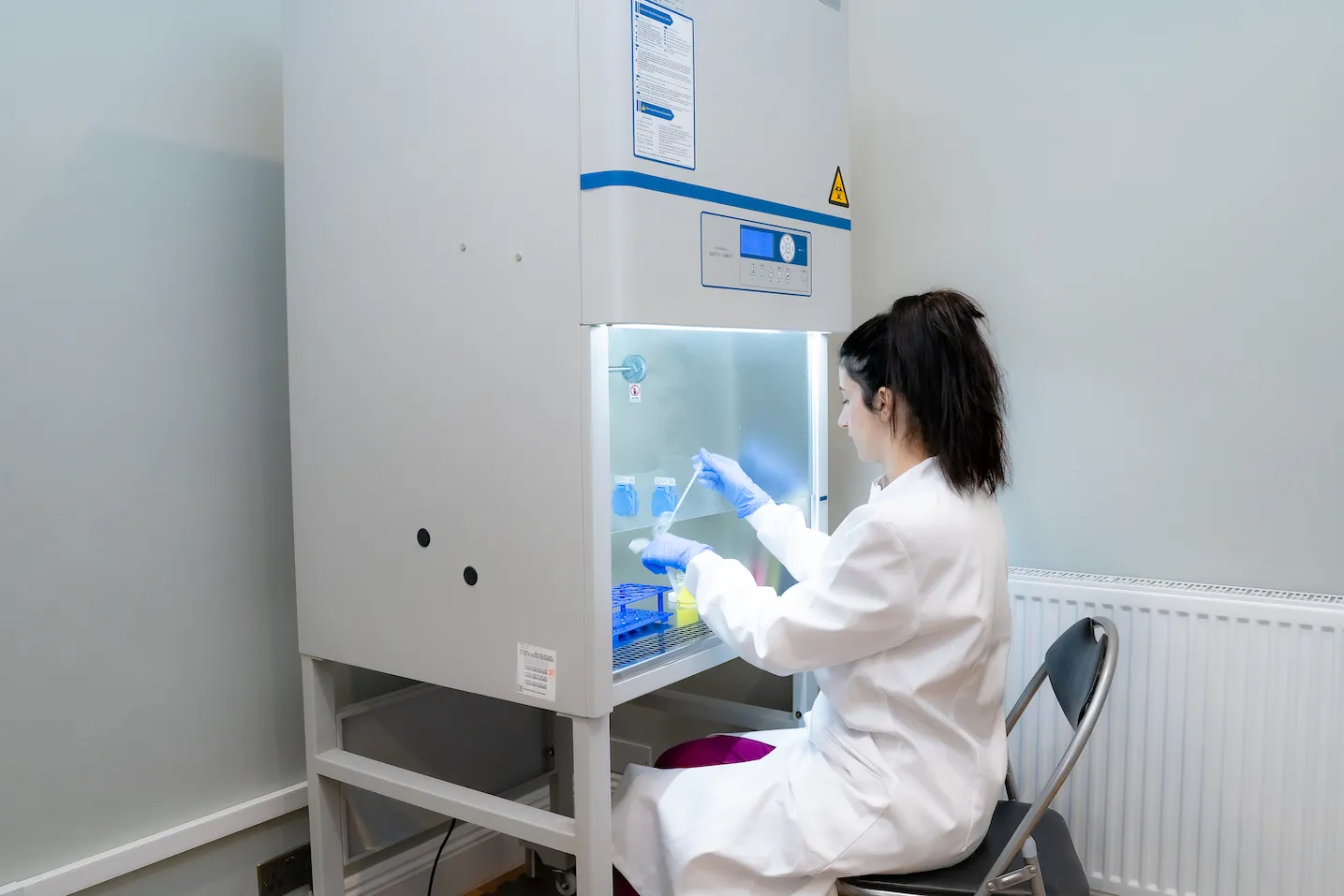
Manchester, UK — 19 January 2026 — The Functional Gut Clinic (FGC), the UK’s leading provider of specialist gastrointestinal (GI) diagnostics, today announced the launch of its dedicated GI Clinical Trials establishing the organisation as the country’s first boutique, end‑to‑end clinical research provider focused exclusively on digestive health.
Gastrointestinal conditions affect millions of people in the UK, yet clinical research in this area has often been fragmented, slow or under‑resourced. FGC’s new Clinical Trials Division aims to change this. The new division formalises and expands FGC’s long‑standing research activity, positioning the organisation as a uniquely capable partner for pharmaceutical, biotech and microbiome companies developing next‑generation therapies for conditions such as IBS, SIBO, reflux, motility disorders and functional gastrointestinal (GI) disease.
FGC enters the market with three major advantages that set it apart from generalist CROs:
The UK’s largest volunteer bank for digestive‑health research, with 5,000 opted‑in individuals living with digestive health conditions
Fast‑track recruitment capability, demonstrated by completing ethics approval to full enrolment in under six months in recent studies
Unmatched diagnostic expertise, delivering over 12,000 GI physiology tests each year and operating the only independent UKAS‑accredited GI physiology service in the country. This means participants can be screened rapidly and with a level of clinical precision that significantly streamlines study start‑up
Together, these capabilities allow FGC to recruit rapidly, screen accurately, and deliver high‑quality digestive‑health trials across multiple UK sites. Professor Anthony Hobson, Founder of the Functional Gut Clinic comments: “Digestive health research has historically been slowed by two challenges: finding the right patients and understanding their physiology in enough depth.”
“At the Functional Gut Clinic, we have built the UK’s largest bank of opted‑in volunteers with digestive conditions, and we combine this with unparalleled diagnostic capability. Launching our Clinical Trials Division allows us to bring these strengths together to accelerate the development of new therapies and support companies working at the forefront of gut science.”
Landmark trial success demonstrates capability
The launch follows the recent success of a Phase 2a IBS study for EnteroBiotix, which enrolled 122 participants. FGC played a central role in the trial, supporting participant recruitment, clinical assessment and ongoing care. Recruitment was enabled using FGC’s research volunteer database, allowing the study to progress from ethics approval to full enrolment in under six months.
“The Functional Gut Clinic played a pivotal role in enabling the successful delivery of our Phase 2a trial,” explains Dr James McIlroy, Founder & CEO, EnteroBiotix, “Their ability to deliver a compliant study within agreed timelines, assess patients with precision and provide high‑quality clinical oversight made a meaningful difference to the study. Professor Hobson’s presentation of the data at Digestive Disease Week 2025 as a late breaking oral presentation reflects the strength of our collaboration, and we look forward to expanding our work together as we progress into the next phase of development.”
A specialist partner for GI‑focused clinical development
FGC has already delivered research programmes for leading global companies including ADM Protexin (Bio‑Kult), Reckitt Benckiser (Gaviscon), Medtronic and EnteroBiotix, supporting studies across probiotics, OTC medicines, medical devices and microbiome therapeutics. Unlike large generalist CROs, FGC offers a boutique, specialist model tailored to the complexities of digestive‑health research. This includes:
Deep GI expertise across physiology, motility, reflux, microbiome science and functional disorders.
Precision screening using advanced diagnostic testing to ensure high‑quality participant selection.
Agile, flexible trial delivery across multiple established UK sites.
End‑to‑end support, from study design and ethics preparation to data analysis and publication.
Access to a vast and highly engaged patient community, enabling rapid recruitment and high retention.
Playing a pivotal role in the delivery of the new Clinical Trials division is Sam Treadway, Chief Scientific Officer at the Functional Gut Clinic. He adds: “By integrating our diagnostic expertise with our research infrastructure and a large, engaged volunteer community, we can deliver trials that move quickly without compromising scientific rigour. We provide sponsors with a specialist partner who understands the nuances of GI disease far better than a general research organisation.”
Investment enabling national expansion
The launch of the Clinical Trials Division follows a £5.75 million investment from Foresight Group, announced in 2025. The investment is supporting expansion of FGC’s national footprint, growth of its clinical research team and strengthening of its trial‑delivery infrastructure. FGC operates three permanent clinics in Manchester, Cambridge and London, alongside several collaborative clinics across the UK.
Companies interested in conducting digestive‑health research can learn more at: https://thefunctionalgutclinic.com/gi-clinical-trials. All studies are overseen by independent research ethics committees and delivered to high clinical and regulatory standards.

Hear from people we’ve helped, just like you.
"Very professional while welcoming and friendly"
"The manner and demeanour of all staff from reception to people carrying out the test was very professional but welcoming and friendly. Atmosphere is very relaxed and all instructions clear and concise."
London Patient

"Highly recommend this"
"Thanks to Dr Hobson and everyone at the Functional Gut Clinic. The whole team is very kind and generous and they are doing things that are cutting edge and they actually get results."
Manchester Patient
"Highly recommend this"
"After stopping my lansoprazole, every time I had a warm drink, I could feel it burn all the way down to my stomach. Thank you to Sam for making me feel at ease." - Manchester Patient
"My experience could not be better"
"Pleasant and knowledgeable staff that made the experience more enjoyable than it should be!" - London Patient
"Very friendly and knowledgeable"
"An excellent service from beginning to end. I would recommend to anyone who was considering having testing done. Very friendly and knowledgeable!" - Manchester Patient
"Very kind and helpful"
"It was also great to have time to talk to the clinicians – very important when you have problems. Reception staff also very kind and helpful." - Manchester Patient
Are you experiencing any other symptoms
Symptoms are often closely connected. Find out more below.
Reflux

Burning mid-chest, worse when bending or lying down
Constipation

Difficulty going to the toilet, unusual stools, often with stomach ache or intestinal cramps, bloating, nausea or appetite loss
Heartburn
A burning pain in your chest, just behind your breastbone.
The pain is often worse after eating...
Regurgitation

Bringing food or drink back up, difficulty swallowing, feeling that food or drink is stuck in your throat, horrible taste in your mouth
Swallowing Issues
Dysphagia - difficulty swallowing, feeling that food or drink is stuck in your throat, horrible taste in your mouth
Diarrhoea

Loose or explosive stools, can’t get to a toilet in time
Abdominal Pain

Cramps; sharp or dull pain, Bloating, Excessive belching, Nausea or vomiting
Faecal Incontinence
Stools leak unexpectedly, Can’t get to a toilet in time
IBS

Abdominal pain or cramping, bloating, changes in bowel habits and urgency, gas
HEALTH ASSESSMENT
WHO WE ARE
HOW WE HELP YOU
LEARN
SUPPORT
FOLLOW US
© Copyright The Functional Gut Group 2026