
Bloating
Struggling with bloating? Here’s what you need to know to find relief.
ALL TEST ARE ACCREDITED & REGULATED BY



What is bloating?
When you’re bloated, your stomach or abdomen can feel full and uncomfortable, or even painful.
This bloating happens when your gastrointestinal tract contains too much gas or air. Bloating can be mild, or more severe, and may present as:
– A visibly distended or swollen abdomen
– Feeling very full and uncomfortable
– Feeling of tightness in the abdomen
– Excess gas – belching and/or flatulence
– Rumbling or gurgling
There are several causes of bloating, so it’s important to diagnose the cause of your bloating and find out why it’s happening to you.

Why does bloating happen?
Prolonged periods of bloating could indicate an underlying health problem, if so you should see your GP.
Possible causes can include:
Irritable bowel syndrome (IBS diagnosis)
Ulcerative colitis, a form of inflammatory bowel disease (IBD), where the inner lining of the large bowel is inflamed and develops ulcers
Crohn’s disease, the other form of IBD, where some parts of your colon are inflamed
Too much bacteria in your small intestine (called small intestinal bacterial overgrowth, or SIBO)
Gastroesophageal reflux disease
Food intolerances, especially lactose or fructose intolerance
Producing too much gas (dysbiosis and fermentation)
Weight gain
Stress or anxiety
Delays in your food and drink moving on from your stomach (called gastroparesis)
Eating too quickly, so that you swallow too much air (called aerophagia)
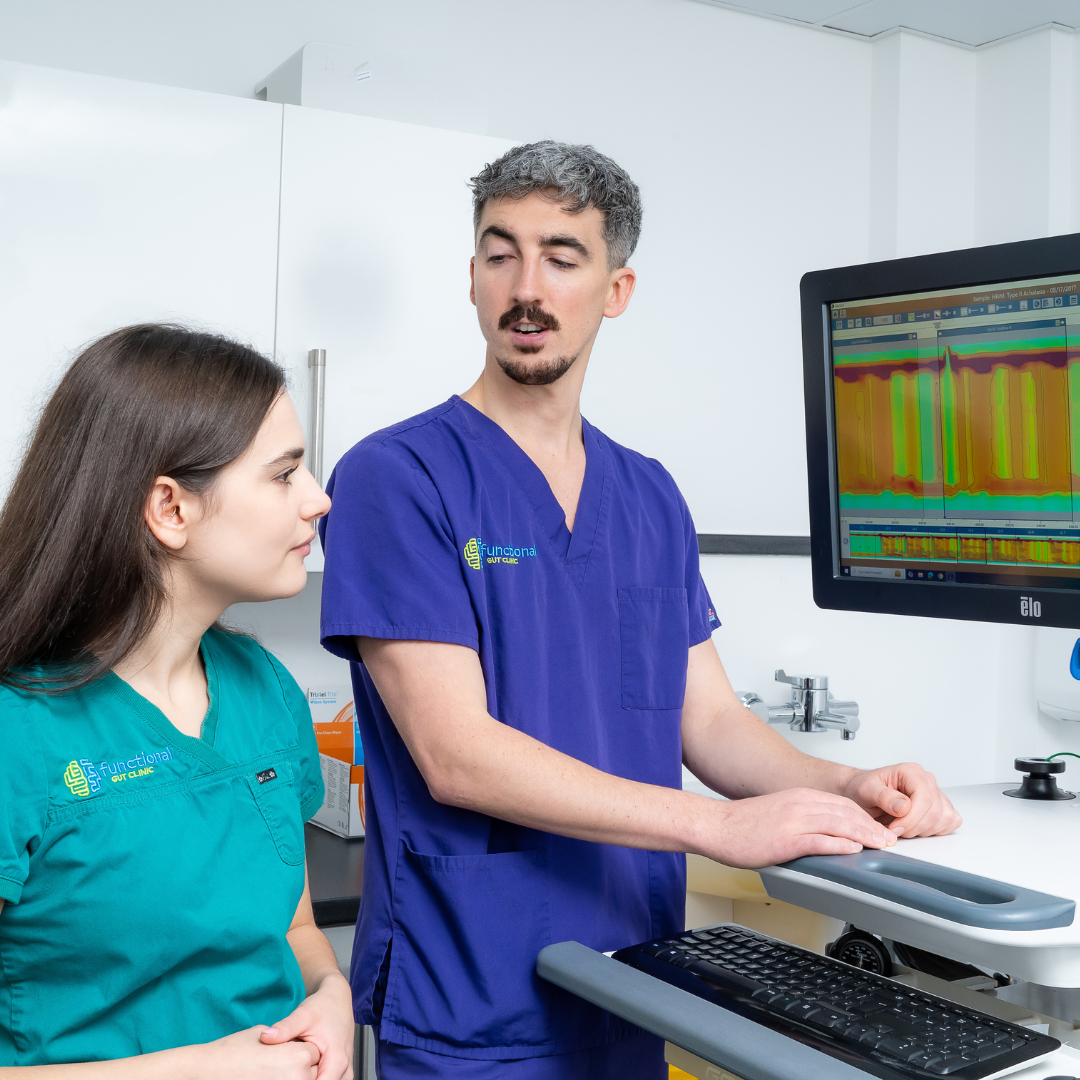
Diagnosing bloating
Feeling bloated is no fun, but once you know what’s going on you can start to manage your symptoms and the underlying causes.
Testing options:
At the Functional Gut Clinic, we can run the following tests to diagnose the causes of bloating:
Gastric emptying test– which measures how quickly food leaves your stomach
Carbohydrate malabsorption breath test– which finds out if you have certain food intolerances (lactose or fructose)
Small intestinal bacterial overgrowth (SIBO) breath test– which finds out if you have an overgrowth of bacteria in your small intestine (called SIBO)
Oesophageal manometry– which measures the function of your oesophagus (food pipe)
24-hour pH impedance monitoring– which looks at whether you have any reflux
Colonic transit study-a non-invasive test which looks at how long it takes for faeces to pass through your bowl
Learn more about bloating

10 Ways to Strengthen Your Gut Microbiome | Improve Your Gut Health Naturally
Your gut is home to trillions of bacteria, fungi, and other microbes — more than the number of stars in our galaxy. That specific mix is unique to you. Known as your “gut microbiome,” they’re critical for your healthy functioning.
But we don’t always treat them kindly. Fast food, antibiotics, and even constant stress all harm our gut microbiome (with ripple effects for the rest of your body). Gut microbiome testing is the only way to see the damage (and start to repair it).
Below are ten proven ways to strengthen your gut microbiome and restore balance naturally.
10 Science-Backed Ways to Improve Your Gut Microbiome
1. Eat more fibre-rich plant foods
Your diet doesn’t just feed you; it feeds your gut microbiome too. Eating a diet rich in vegetables, fruits, legumes, nuts, seeds, and wholegrains feeds your beneficial bacteria. Often, a species survives on a single food type, meaning if you don’t eat it, the species has no fuel to survive and grow.
One good tip is to eat lots of different coloured foods. Each different pigment can help a certain species flourish, supporting microbial diversity.
2. Include fermented foods regularly
Fibre-rich foods are known as “prebiotics” — they feed your gut microbiome. Whereas “probiotics” are foods that contain live bacteria to help replenish your levels. They’re incredibly useful if you’ve just had diarrhoea or been on a course of antibiotics.
Typical probiotic foods are fermented foods. These include kimchi, sauerkraut, kefir, Greek yoghurt, and miso. Even a small but regular portion of these can help support your gut microbiome.
3. Reduce ultra-processed foods
It isn’t just about adding in those fibre-rich and fermented foods though. Aiming to limit ultra-processed foods may also be helpful. Some studies suggest that highly processed foods, containing emulsifiers and artificial sweeteners, may damage the gut lining and disrupt gut microbial balance. Not only may they harm your beneficial bacteria, but this might also allow the number of harmful bacteria to increase.
4. Eat a wider variety of foods
If each bacterium relies on as little as a single food for survival, restricting your diet to a small number of foods means only a few species will survive. This leads to less diversity and that’s a problem. Even when people eat lots of fruits and vegetables, they tend to rely on a few of their favourites.
But some carrots, broccoli, and a daily banana aren’t enough to support a healthy and diverse gut microbiome. Studies have suggested aiming to eat 30 different plant foods per week is what we need for optimal gut microbiome diversity. So, the closer you get to this goal, the healthier your microbiome may become, and therefore your body.
5. Manage stress consistently
Chronic stress is never good for your body.
Whenever you’re stressed long-term, your cortisol levels spike. Cortisol is fine briefly, but consistently high levels degrade your body’s resilience. Not only does it impact your cells, but it also affects your gut bacteria.
Taking the time to relax can make a big difference. Breathwork, walking, socialising, and good sleep all directly improve gut health.
6. Get regular, moderate exercise
Just as chronic stress is always bad, regular exercise is universally good.
Think about the last time you went for a walk. Did you notice any effect it might have had on your bowels? Regular movement boosts gut motility, reduces inflammation, and increases beneficial bacterial species. It’s smart to time a short walk after big meals as this has been shown to aid with digestion and improve blood sugar response.
7. Support healthy stomach acid
Stomach acid is crucial for digestion. It kills off harmful bacteria and begins to break down your food. But if levels fall too low, harmful bacteria may make it into your gut, competing against your beneficial bacteria.
But it’s a balance, if stomach acid levels are too high this may increase your risk of acid reflux.
Our advice? Avoid constant grazing, chew well, and, if possible, minimize acid suppressants if you haven’t been prescribed them to support digestion and maintain healthy stomach acid levels.
If you experience constant acid reflux symptoms though, speak to your GP. You may find you need to take these medications (e.g. PPIs).
8. Limit alcohol intake
Alcohol is disastrous for your gut. It damages the gut lining and may promote harmful bacteria. Less really is more when it comes to microbiome health.
9. Use antibiotics only when necessary
Sometimes, the only thing that will make you feel better is a course of antibiotics. That’s fine, but only if it’s necessary.
Antibiotics are a double-edged sword. They might kill the bacteria that caused your infection, but they can also wipe out your beneficial bacteria too. If necessary, always support recovery with probiotics and high fibre foods. Taking a probiotic supplement after a course of antibiotics could help you restore your microbiome.
10. Stay well hydrated
Most of us don’t drink enough water. Too often, our main source of hydration throughout the day is tea and coffee. While we may think these drinks are hydrating us, they could be dehydrating us further.
Drinking water supports digestion, stool consistency, and nutrient absorption, all helping to maintain a healthy gut environment.
Take the Guesswork Out of Your Gut Health
If you’ve been doing all the right things but still feel stuck with symptoms, it may be time to look a little deeper.
At The Functional Gut Clinic, advanced microbiome testing helps uncover the specific imbalances affecting your digestion, energy, skin, and mood. With expert-led interpretation and personalised treatment plans, you’re supported every step of the way.
Book your assessment today and take a clearer, more confident step towards lasting gut health.
You may find this article interesting: Signs Your Microbiome is Unbalanced

Hear from people we’ve helped, just like you.
"Very professional while welcoming and friendly"
"The manner and demeanour of all staff from reception to people carrying out the test was very professional but welcoming and friendly. Atmosphere is very relaxed and all instructions clear and concise."
London Patient

"Highly recommend this"
"Thanks to Dr Hobson and everyone at the Functional Gut Clinic. The whole team is very kind and generous and they are doing things that are cutting edge and they actually get results."
Manchester Patient
"Highly recommend this"
"After stopping my lansoprazole, every time I had a warm drink, I could feel it burn all the way down to my stomach. Thank you to Sam for making me feel at ease." - Manchester Patient
"My experience could not be better"
"Pleasant and knowledgeable staff that made the experience more enjoyable than it should be!" - London Patient
"Very friendly and knowledgeable"
"An excellent service from beginning to end. I would recommend to anyone who was considering having testing done. Very friendly and knowledgeable!" - Manchester Patient
"Very kind and helpful"
"It was also great to have time to talk to the clinicians – very important when you have problems. Reception staff also very kind and helpful." - Manchester Patient
Are you experiencing any other symptoms
Symptoms are often closely connected. Find out more below.
Reflux

Burning mid-chest, worse when bending or lying down
Constipation

Difficulty going to the toilet, unusual stools, often with stomach ache or intestinal cramps, bloating, nausea or appetite loss
Heartburn
A burning pain in your chest, just behind your breastbone.
The pain is often worse after eating...
Regurgitation

Bringing food or drink back up, difficulty swallowing, feeling that food or drink is stuck in your throat, horrible taste in your mouth
Swallowing Issues
Dysphagia - difficulty swallowing, feeling that food or drink is stuck in your throat, horrible taste in your mouth
Diarrhoea

Loose or explosive stools, can’t get to a toilet in time
Abdominal Pain

Cramps; sharp or dull pain, Bloating, Excessive belching, Nausea or vomiting
Faecal Incontinence
Stools leak unexpectedly, Can’t get to a toilet in time
IBS

Abdominal pain or cramping, bloating, changes in bowel habits and urgency, gas
HEALTH ASSESSMENT
WHO WE ARE
HOW WE HELP YOU
LEARN
SUPPORT
FOLLOW US
© Copyright The Functional Gut Group 2026