
Bloating
Struggling with bloating? Here’s what you need to know to find relief.
ALL TEST ARE ACCREDITED & REGULATED BY



What is bloating?
When you’re bloated, your stomach or abdomen can feel full and uncomfortable, or even painful.
This bloating happens when your gastrointestinal tract contains too much gas or air. Bloating can be mild, or more severe, and may present as:
– A visibly distended or swollen abdomen
– Feeling very full and uncomfortable
– Feeling of tightness in the abdomen
– Excess gas – belching and/or flatulence
– Rumbling or gurgling
There are several causes of bloating, so it’s important to diagnose the cause of your bloating and find out why it’s happening to you.

Why does bloating happen?
Prolonged periods of bloating could indicate an underlying health problem, if so you should see your GP.
Possible causes can include:
Irritable bowel syndrome (IBS diagnosis)
Ulcerative colitis, a form of inflammatory bowel disease (IBD), where the inner lining of the large bowel is inflamed and develops ulcers
Crohn’s disease, the other form of IBD, where some parts of your colon are inflamed
Too much bacteria in your small intestine (called small intestinal bacterial overgrowth, or SIBO)
Gastroesophageal reflux disease
Food intolerances, especially lactose or fructose intolerance
Producing too much gas (dysbiosis and fermentation)
Weight gain
Stress or anxiety
Delays in your food and drink moving on from your stomach (called gastroparesis)
Eating too quickly, so that you swallow too much air (called aerophagia)
Diagnosing bloating
Feeling bloated is no fun, but once you know what’s going on you can start to manage your symptoms and the underlying causes.
Testing options:
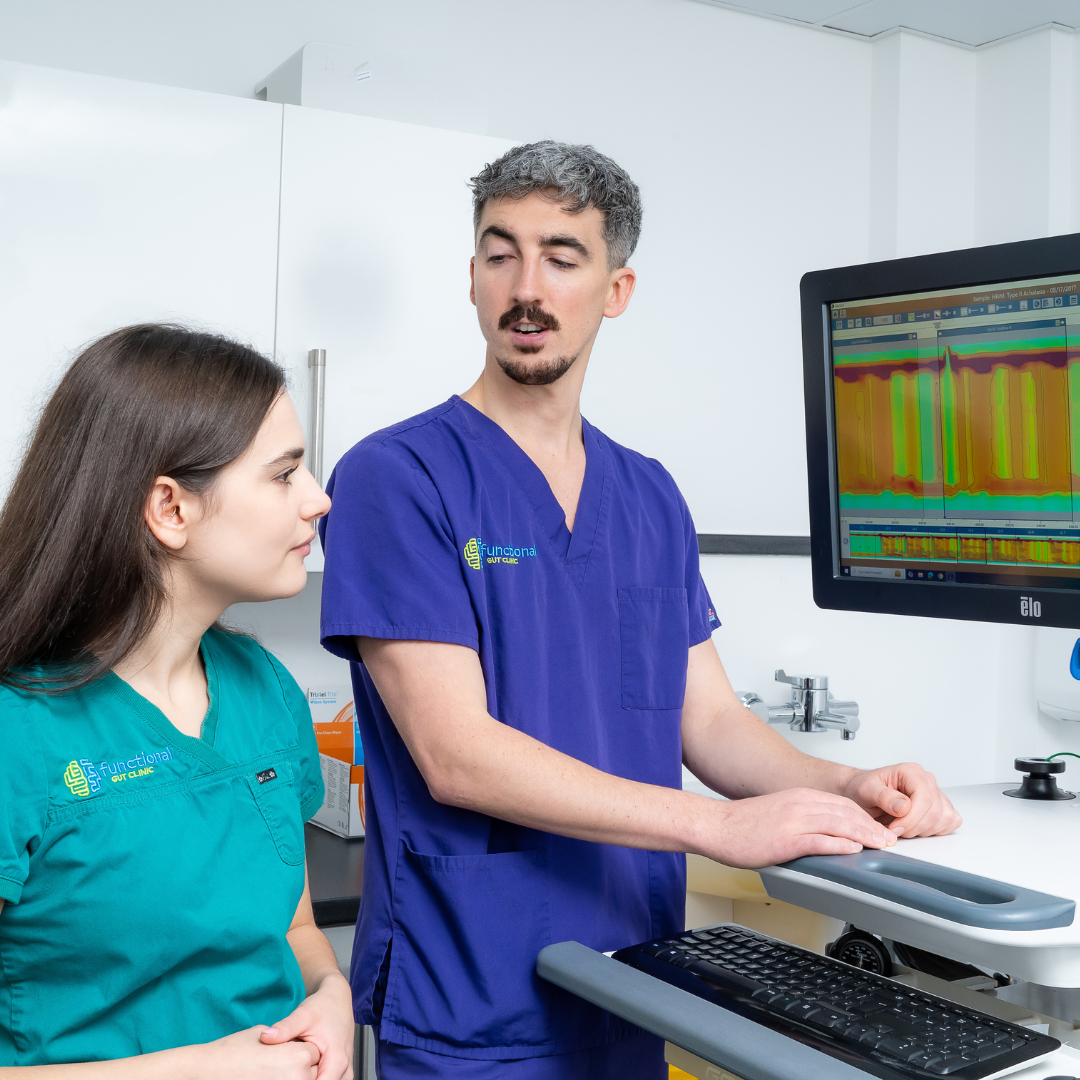
At the Functional Gut Clinic, we can run the following tests to diagnose the causes of bloating:
Gastric emptying test– which measures how quickly food leaves your stomach
Carbohydrate malabsorption breath test– which finds out if you have certain food intolerances (lactose or fructose)
Small intestinal bacterial overgrowth (SIBO) breath test– which finds out if you have an overgrowth of bacteria in your small intestine (called SIBO)
Oesophageal manometry– which measures the function of your oesophagus (food pipe)
24-hour pH impedance monitoring– which looks at whether you have any reflux
Colonic transit study-a non-invasive test which looks at how long it takes for faeces to pass through your bowl
Learn more about bloating
Gut Microbiome Test vs Stool Test vs Breath Test: Which Do You Actually Need?
Bloating, diarrhoea, constipation, and abdominal discomfort can all have very different causes. Unfortunately, there isn’t a single test you can take to identify the underlying cause.
Most tests for gut health look for specific markers to understand what’s going wrong. They’re trying to answer one of four questions:
Who is living in the gut?
Where and how is fermentation occurring?
Is the gut barrier functioning normally?
Is inflammation present?
No single test answers all four questions. Depending on your symptoms, either a single test or a combination of tests is needed to make a diagnosis. But what’s the best gut health test? How does a gut microbiome test compare to other tests? And when is each test recommended? Find out below.
A Stool Test Is Not One Specific Test
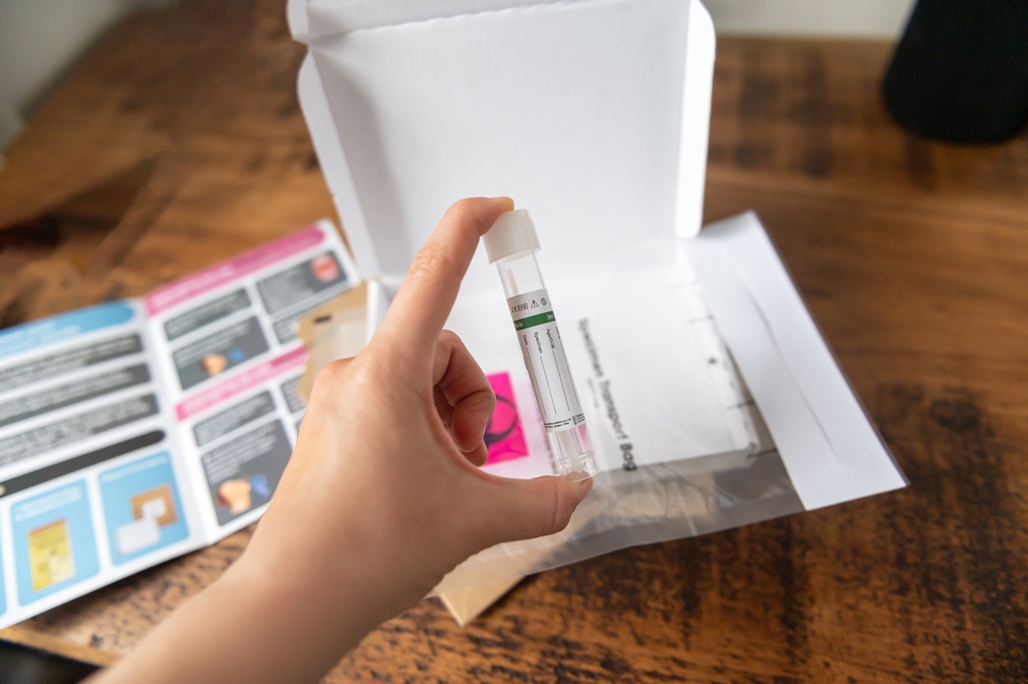
The term “stool test” is often used as a catch-all for several different tests. It refers to what’s being collected, not what is being measured.
For example, both microbiome sequencing and faecal calprotectin use stool samples but answer completely different questions. Other stool tests may investigate infection, digestive function, or blood.
Because of this difference, it’s important to understand why your doctor is recommending a specific test, not just what they’re asking you to provide.
Gut Health Tests Compared
Test | The Question It Answers | What It Measures | Common Reason for Testing |
Gut microbiome test | Who is there? | Microbial species, composition, and diversity | Exploring the gut microbial community |
Hydrogen and methane breath test | Is abnormal fermentation occurring? | Gases produced after consuming a test substrate | Suspected SIBO or carbohydrate malabsorption |
Gut permeability test | How is the barrier functioning? | Movement of specific markers across the intestinal lining | Investigating gut barrier integrity |
Faecal calprotectin | Is there intestinal inflammation? | A protein released during inflammation | Helping distinguish inflammatory from functional bowel symptoms |
What Does a Gut Microbiome Test Show?
A gut microbiome test sequences microbial genetic material found in the stool. It can identify the types and relative abundance of microorganisms present.
That’s important because low diversity or the overgrowth of a particular species can cause symptoms like bloating, diarrhoea, or flatulence. However, it cannot independently diagnose SIBO (small intestine bacterial overgrowth) or prove that symptoms are caused by a particular species.
What Does a Breath Test Show?
Certain microbes produce hydrogen, methane, and or hydrogen sulphide when they ferment carbohydrates. These gases enter the bloodstream and are eventually exhaled.
That means they can be measured in your breath.
Glucose or lactulose breath testing is used specifically when SIBO is suspected. Other substrates can investigate lactose or fructose malabsorption. However, without a gut microbiome test, it’s impossible to know the specific gut microbes behind the overgrowth.
What Does a Gut Permeability Test Show?
The gut lining prevents the harmful microbes and molecules in the gut from entering the bloodstream. It works as a selective barrier that absorbs nutrients while limiting the passage of unwanted materials.
Permeability tests assess how readily specific probe substances or markers cross the barrier. If the barrier is too “leaky,” it could explain bloating, inflammation, and other symptoms. An abnormal result does not explain all symptoms, however.
What Does a Faecal Calprotectin Test Show?
Calprotectin is released by inflammatory cells and can be measured in the stool. It’s primarily a test to confirm gut inflammation and can help diagnose conditions like inflammatory bowel disease.
Unfortunately, the test is not diagnostic and only helps point doctors in the right direction.
Which Is the Best Gut Health Test?
There is no single best gut health test. The right choice depends on what you are trying to discover.
A gut microbiome test shows which microorganisms are present and their relative abundance. Breath testing investigates fermentation and may help identify SIBO or carbohydrate malabsorption.
A permeability test examines how well the gut barrier is formed, while faecal calprotectin checks for intestinal inflammation.
Because these tests answer different questions, the most comprehensive option is not automatically the most useful. Your symptoms, medical history, and suspected condition should guide the decision, ideally with advice from a clinician experienced in digestive testing services.
Book a Gut Health Check in the UK
If you’re struggling with symptoms like bloating, diarrhoea, constipation, or abdominal discomfort, getting your gut tested is the best first step. Our team can help advise you on the best gut health test based on your symptoms and medical history.
The Functional Gut Clinic offers a full range of gut health tests. We’re the UK’s first fully integrated full-spectrum microbiome clinic. Learn more about our testing options and take control of your health.
Check out the next article: Gut Health for Athletes and Regular Exercisers

Hear from people we’ve helped, just like you.
"Very professional while welcoming and friendly"
"The manner and demeanour of all staff from reception to people carrying out the test was very professional but welcoming and friendly. Atmosphere is very relaxed and all instructions clear and concise."
London Patient

"Highly recommend this"
"Thanks to Dr Hobson and everyone at the Functional Gut Clinic. The whole team is very kind and generous and they are doing things that are cutting edge and they actually get results."
Manchester Patient
"Highly recommend this"
"After stopping my lansoprazole, every time I had a warm drink, I could feel it burn all the way down to my stomach. Thank you to Sam for making me feel at ease." - Manchester Patient
"My experience could not be better"
"Pleasant and knowledgeable staff that made the experience more enjoyable than it should be!" - London Patient
"Very friendly and knowledgeable"
"An excellent service from beginning to end. I would recommend to anyone who was considering having testing done. Very friendly and knowledgeable!" - Manchester Patient
"Very kind and helpful"
"It was also great to have time to talk to the clinicians – very important when you have problems. Reception staff also very kind and helpful." - Manchester Patient
Are you experiencing any other symptoms
Symptoms are often closely connected. Find out more below.
Reflux

Burning mid-chest, worse when bending or lying down
Constipation

Difficulty going to the toilet, unusual stools, often with stomach ache or intestinal cramps, bloating, nausea or appetite loss
Heartburn
A burning pain in your chest, just behind your breastbone.
The pain is often worse after eating...
Regurgitation

Bringing food or drink back up, difficulty swallowing, feeling that food or drink is stuck in your throat, horrible taste in your mouth
Swallowing Issues
Dysphagia - difficulty swallowing, feeling that food or drink is stuck in your throat, horrible taste in your mouth
Diarrhoea

Loose or explosive stools, can’t get to a toilet in time
Abdominal Pain

Cramps; sharp or dull pain, Bloating, Excessive belching, Nausea or vomiting
Faecal Incontinence
Stools leak unexpectedly, Can’t get to a toilet in time
IBS

Abdominal pain or cramping, bloating, changes in bowel habits and urgency, gas
HEALTH ASSESSMENT
WHO WE ARE
HOW WE HELP YOU
LEARN
SUPPORT
FOLLOW US
© Copyright The Functional Gut Group 2026