
Bloating
Struggling with bloating? Here’s what you need to know to find relief.
ALL TEST ARE ACCREDITED & REGULATED BY



What is bloating?
When you’re bloated, your stomach or abdomen can feel full and uncomfortable, or even painful.
This bloating happens when your gastrointestinal tract contains too much gas or air. Bloating can be mild, or more severe, and may present as:
– A visibly distended or swollen abdomen
– Feeling very full and uncomfortable
– Feeling of tightness in the abdomen
– Excess gas – belching and/or flatulence
– Rumbling or gurgling
There are several causes of bloating, so it’s important to diagnose the cause of your bloating and find out why it’s happening to you.

Why does bloating happen?
Prolonged periods of bloating could indicate an underlying health problem, if so you should see your GP.
Possible causes can include:
Irritable bowel syndrome (IBS diagnosis)
Ulcerative colitis, a form of inflammatory bowel disease (IBD), where the inner lining of the large bowel is inflamed and develops ulcers
Crohn’s disease, the other form of IBD, where some parts of your colon are inflamed
Too much bacteria in your small intestine (called small intestinal bacterial overgrowth, or SIBO)
Gastroesophageal reflux disease
Food intolerances, especially lactose or fructose intolerance
Producing too much gas (dysbiosis and fermentation)
Weight gain
Stress or anxiety
Delays in your food and drink moving on from your stomach (called gastroparesis)
Eating too quickly, so that you swallow too much air (called aerophagia)

Diagnosing bloating
Feeling bloated is no fun, but once you know what’s going on you can start to manage your symptoms and the underlying causes.
Testing options:
At the Functional Gut Clinic, we can run the following tests to diagnose the causes of bloating:
Gastric emptying test– which measures how quickly food leaves your stomach
Carbohydrate malabsorption breath test– which finds out if you have certain food intolerances (lactose or fructose)
Small intestinal bacterial overgrowth (SIBO) breath test– which finds out if you have an overgrowth of bacteria in your small intestine (called SIBO)
Oesophageal manometry– which measures the function of your oesophagus (food pipe)
24-hour pH impedance monitoring– which looks at whether you have any reflux
Colonic transit study-a non-invasive test which looks at how long it takes for faeces to pass through your bowl
Learn more about bloating
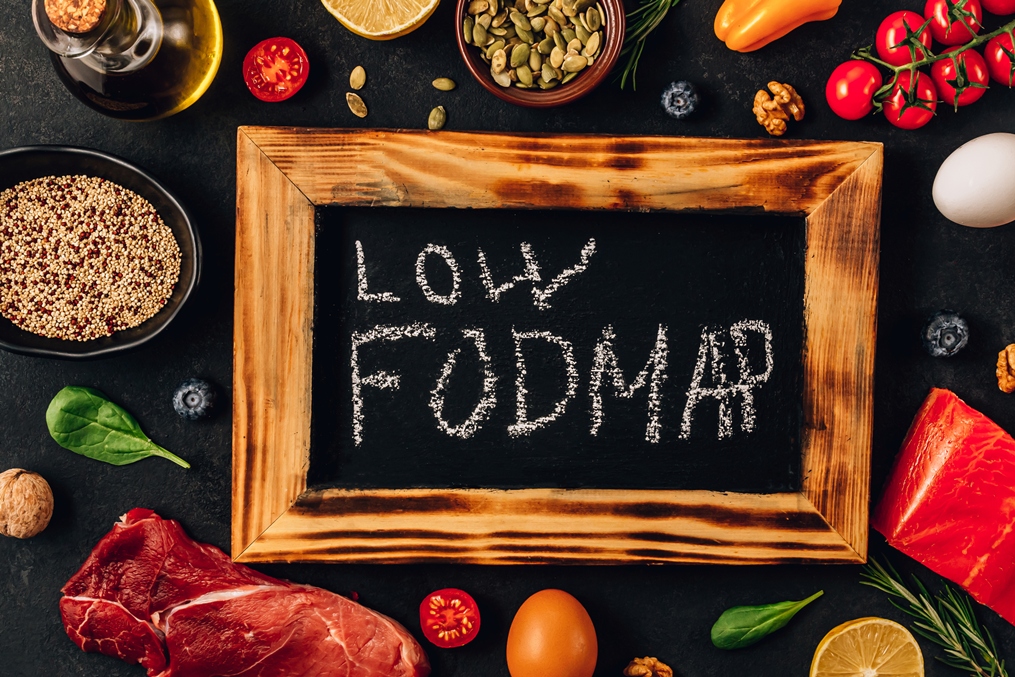
Low FODMAP Food List: What You Can and Can’t Eat
FODMAPs, or fermentable oligosaccharides, disaccharides, monosaccharides, and polyols, are types of carbohydrates found in some foods that can cause IBS-like symptoms. People often notice abdominal discomfort, bloating, flatulence, or changes in bowel habits after eating these foods.
Avoiding high FODMAP foods and adding low FODMAP foods into your diet is one of the best ways to manage IBS. Unfortunately, it’s not always clear what is and isn’t low FODMAP. If digestive problems persist, read more about IBS symptoms and testing before assuming food is the only cause.
Below, we provide a comprehensive low FODMAP food list, detailing everything you can eat and what should be avoided.
How to Use This Low FODMAP Food List
In the UK, the only validated sources for low FODMAP food guidance are Monash University and King’s College London. We based our guidance on their recommendations. Most online lists become outdated as foods are retested, so if in doubt, go and check what they have to say.
For the elimination, reintroduction, and personalisation stages, see our beginner’s guide to the low FODMAP diet. However, you should only follow this with the guidance of your healthcare professional or registered dietician.
Low FODMAP Food List by Category
Category | High FODMAP Foods to Limit | Low FODMAP Alternatives | Useful Portion Note |
Fruit | Apples, pears, mango, cherries, peaches, plums, watermelon, and dried fruit | Oranges, mandarins, kiwifruit, pineapple, blueberries, grapes, and cantaloupe | Ripeness and quantity matter. One medium unripe banana, around 100g, is a validated low FODMAP serving. |
Vegetables | Onion, garlic, asparagus, artichoke, leek, green peas, and many mushrooms | Carrots, potatoes, cucumber, lettuce, aubergine, green beans, bok choy, kale, and courgette | Garlic-infused oil provides flavour without the fructans because FODMAPs do not dissolve in oil. |
Bread, Grains and Cereals | Large servings of wheat or rye bread, wheat pasta, and some breakfast cereals | Rice, oats, quinoa, rice noodles, gluten-free pasta, and suitable sourdough spelt bread | One 24g slice of wholemeal wheat bread may be low FODMAP, while a standard two-slice serving is high. |
Milk and Dairy Products | Regular milk, yoghurt, custard, ice cream, and soft dairy desserts | Lactose-free milk and yoghurt, hard cheeses, feta, brie, camembert, and suitable almond milk | Hard cheeses contain very little lactose. Dairy-free does not automatically mean low FODMAP. |
Protein, Pulses, Nuts and Seeds | Cashews, pistachios, large portions of legumes, and meats containing onion or garlic | Eggs, plain meat, fish, firm tofu, tempeh, peanuts, walnuts, macadamias, and most seeds | Around 46g of drained canned chickpeas can be low FODMAP, while an 84g serving may become high. |
Sauces, Sweeteners and Snacks | Honey, sugar-free sweets, garlic sauces, onion-based gravies, and products containing polyols | Table sugar, maple syrup, rice malt syrup, dark chocolate, mayonnaise, and suitable soy sauce | Check complete ingredient lists rather than relying on the product name or “free-from” label. |
Why Portion Size Changes the Answer
Food classifications also depend on the portion eaten per meal, not simply whether the ingredient contains any FODMAPs. A small portion of a relatively high FODMAP food may not be as disruptive as a lot of a food with a low-to-medium FODMAP concentration.
For example, avocado is low at 30g, moderate at 45g, and high at 80g. The same is true of staple foods: one 24g slice of wholemeal bread can be low FODMAP, while two slices may cross the threshold.
Understanding these differences means most foods aren’t completely off limits. It’s just about the portion you serve for each meal. Check the Monash serving guidance for further details.
Hidden High FODMAP Ingredients
Unfortunately, not all high FODMAP foods are immediately obvious. You might think you’ve memorised the list, but then you find your favourite-flavoured crisps actually use onion powder. Looking at the ingredients list is a must if you want a truly low FODMAP diet.
Here are some of the foods hiding FODMAP ingredients:
·Onion and garlic powder in stock cubes, sauces, seasoning mixes, marinades, and flavoured crisps
·Inulin, chicory root fibre, and fructooligosaccharides in cereals, protein bars, yoghurt, and supplements
·Sorbitol, mannitol, xylitol, maltitol, and isomalt in sugar-free sweets and chewing gum
·Apple or pear juice concentrate in sauces, drinks, and snack products
Use the List as a Starting Point
This list is only a starting point, not a permanent blacklist. Always follow the recommended guidance from a FODMAP-trained dietitian and refer to the recommendations published by both Monash University and King’s College London.
If you’re still struggling with IBS symptoms, it’s worth considering other diagnoses. The Functional Gut Clinic offers a range of testing options to determine if your symptoms really are caused by IBS or another gut condition. Learn more about our testing options to take control of your health today.
Check out the next article: Is IBS a Disability? Your Rights at Work in the UK

Hear from people we’ve helped, just like you.
"Very professional while welcoming and friendly"
"The manner and demeanour of all staff from reception to people carrying out the test was very professional but welcoming and friendly. Atmosphere is very relaxed and all instructions clear and concise."
London Patient

"Highly recommend this"
"Thanks to Dr Hobson and everyone at the Functional Gut Clinic. The whole team is very kind and generous and they are doing things that are cutting edge and they actually get results."
Manchester Patient
"Highly recommend this"
"After stopping my lansoprazole, every time I had a warm drink, I could feel it burn all the way down to my stomach. Thank you to Sam for making me feel at ease." - Manchester Patient
"My experience could not be better"
"Pleasant and knowledgeable staff that made the experience more enjoyable than it should be!" - London Patient
"Very friendly and knowledgeable"
"An excellent service from beginning to end. I would recommend to anyone who was considering having testing done. Very friendly and knowledgeable!" - Manchester Patient
"Very kind and helpful"
"It was also great to have time to talk to the clinicians – very important when you have problems. Reception staff also very kind and helpful." - Manchester Patient
Are you experiencing any other symptoms
Symptoms are often closely connected. Find out more below.
Reflux

Burning mid-chest, worse when bending or lying down
Constipation

Difficulty going to the toilet, unusual stools, often with stomach ache or intestinal cramps, bloating, nausea or appetite loss
Heartburn
A burning pain in your chest, just behind your breastbone.
The pain is often worse after eating...
Regurgitation

Bringing food or drink back up, difficulty swallowing, feeling that food or drink is stuck in your throat, horrible taste in your mouth
Swallowing Issues
Dysphagia - difficulty swallowing, feeling that food or drink is stuck in your throat, horrible taste in your mouth
Diarrhoea

Loose or explosive stools, can’t get to a toilet in time
Abdominal Pain

Cramps; sharp or dull pain, Bloating, Excessive belching, Nausea or vomiting
Faecal Incontinence
Stools leak unexpectedly, Can’t get to a toilet in time
IBS

Abdominal pain or cramping, bloating, changes in bowel habits and urgency, gas
HEALTH ASSESSMENT
WHO WE ARE
HOW WE HELP YOU
LEARN
SUPPORT
FOLLOW US
© Copyright The Functional Gut Group 2026