
What Your Stool Says About Your Gut
No one ever talks about what a “normal poo” looks like. It’s not something that’s taught in schools. Many people don’t even know there are different kinds of faeces. However, its shape, consistency, colour, and frequency can provide clues about gut function.
Understanding what’s normal or not can help to catch a gut problem early on. If unusual changes persist, a comprehensive gut health check can help investigate what is happening beyond what you can see.
So what are the different types of poo? What does a healthy poo look like? And when should you book a gut health check? Find out below.
What Does Healthy Poo Look Like?
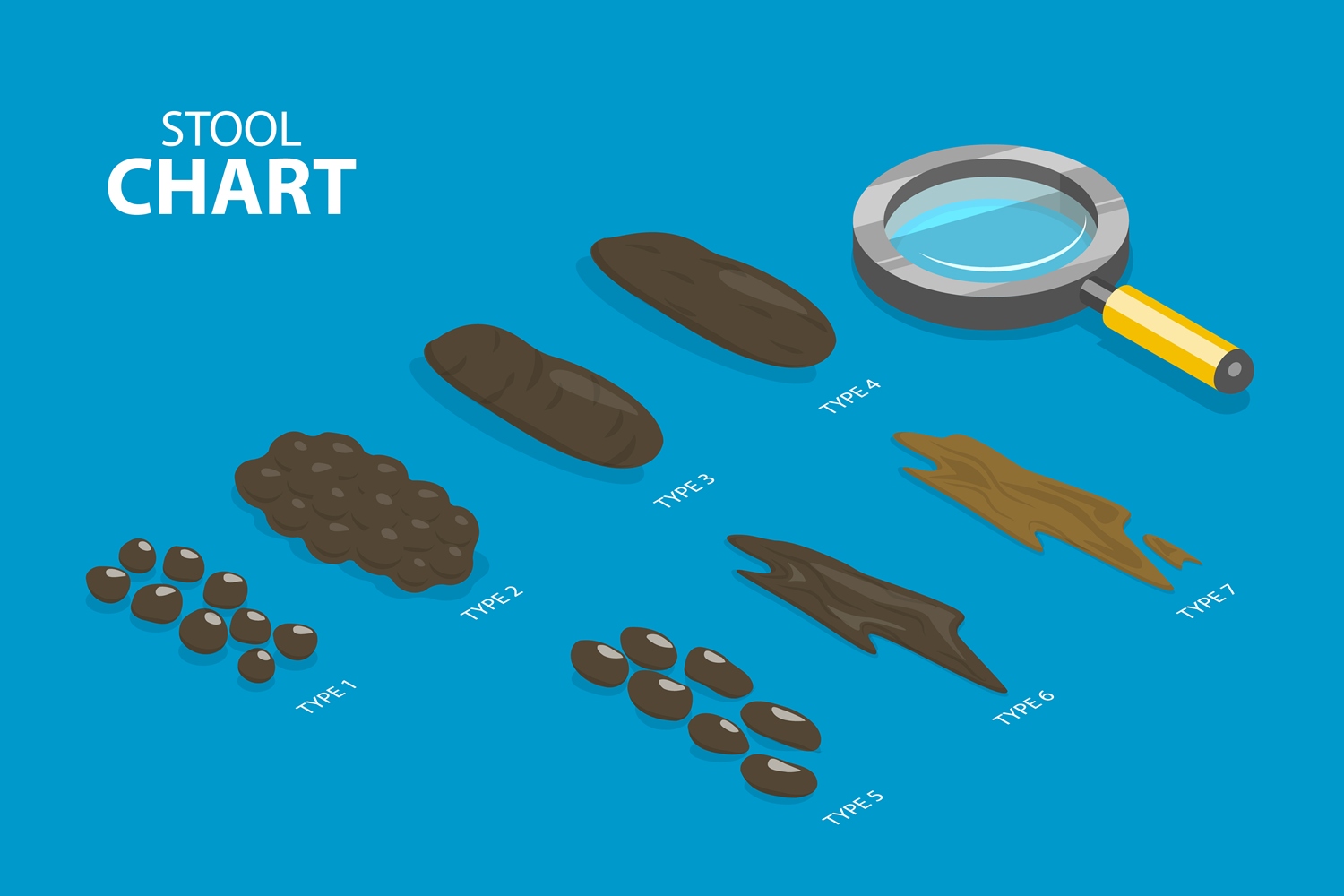
A healthy poo is generally brown, soft, formed, and easy to pass without pain or excessive straining. It is characterised as a Type 3 or 4 on the Bristol Stool Chart (see below).
Bowel frequency can vary more significantly between people. There’s no optimal amount, though most people pass a stool at least once per day.
Occasional changes after travelling, eating differently, becoming stressed, or experiencing a short illness are normal. Repeated or persistent changes are more significant than a single unusual stool.
The Seven Stool Types Explained
The Bristol Stool Chart is a clinical tool that classifies stool by shape and consistency, from hard lumps to entirely liquid. Identifying the specific type can help understand bowel transit but cannot diagnose a condition by itself.
Type | What It Looks Like | What It May Indicate |
Type 1 | Separate, hard lumps | Constipation or slow movement through the bowel |
Type 2 | Sausage-shaped but lumpy | Mild constipation or slower bowel transit |
Type 3 | Sausage-shaped with cracks | Generally healthy and relatively easy to pass |
Type 4 | Smooth, soft, and sausage-shaped | Usually considered the ideal stool type |
Type 5 | Soft blobs with clear edges | Faster transit, although it may be normal for some people |
Type 6 | Mushy pieces with ragged edges | Mild diarrhoea or rapid movement through the bowel |
Type 7 | Entirely watery with no solid pieces | Diarrhoea, particularly if repeated |
What Else Can Your Stool Tell You?
Stool Colour
It’s not just the consistency or shape of the stool that matters. Colour is often a key indicator of disease. Faeces are normally brown due to the presence of bile pigments. However, it can become green due to food colouring, leafy vegetables, or faster bowel transit.
Blood in the stool can either be fresh red, indicating lower bleeding, or black and tar-like, suggesting bleeding higher in the digestive tract. Iron tablets and some medicines can also darken the stool.
Very pale or clay-coloured stool can indicate reduced bile flow and should be assessed if it persists.
Frequency and Ease
Changes in frequency are one of the clearest signs of bowel dysfunction. Look for changes in your usual routine rather than strictly measuring how often you go.
In particular, straining, urgency, or feeling unable to empty your bowel completely can help differentiate normal from abnormal frequency.
Smell, Mucus, and Floating Stools
Lastly, a stool can be abnormal if it floats or comes with mucus. Floating stools commonly contain trapped gas and are not automatically unhealthy. However, if it’s persistently greasy, pale, or difficult to flush, it can suggest poor fat absorption.
Mucus isn’t always abnormal. But persistent mucus alongside pain or diarrhoea can indicate inflammatory bowel disease.
When Should You Speak to a Doctor?
An occasional change in your stool is usually nothing to worry about. However, speak to your GP if you experience:
Blood in your stool or repeated rectal bleeding
Black, tar-like stools without an obvious explanation
Persistent pale stools, especially alongside yellowing of the skin or eyes
A lasting change in bowel habits or unexplained weight loss
Severe abdominal pain, symptoms that wake you at night, or diarrhoea with fever, dehydration, or significant weakness
These signs do not automatically mean something is wrong. However, it’s also best to speak to a clinician to assess the wider picture.
What Stool Appearance Cannot Tell You About Your Gut Health?
Stool appearance often changes with a gut condition. Different kinds of faeces can suggest a particular underlying problem, whether that’s inflammation, infection, malabsorption, or an intestinal barrier problem.
But these symptoms cannot determine exactly what’s going on.
A gut health test is often recommended to identify changes in microbial composition. Gut microbes influence everything from nutrient absorption to inflammation.
The Functional Gut Clinic is the UK’s first fully integrated full-spectrum microbiome clinic. We offer a range of tests to help you understand your symptoms and unlock the potential of your gut microbiome. We’ll provide you with a comprehensive, easy to understand, report to help you take the next steps to support your gut health.
Learn more about our testing options and take control of your health.
Check out the next article: Gut Microbiome and Cholesterol: How They Relate to Heart Health


